
There is a moment in every nursery day that looks like the quietest of all. The lights are dimmed. The room settles. Small chests rise and fall. For a little while, everything slows down.
And it is precisely then that we must be most awake.
I have spent more than forty years in early years and education, and I will say this as plainly as I can: sleep time is not downtime. It is not the moment to catch up on paperwork, to tidy the room, or to step out “just for a minute”. A sleeping baby is as completely in our care as they will ever be, unable to call out, unable to move away from danger, and relying entirely on the adults around them to keep them safe.
The rules have changed, and rightly so
This year, safer sleep moved from good advice to clear, firm expectation. Guidance published by the Department for Education with the Lullaby Trust has now been drawn into the EYFS framework, and Ofsted will expect to see it in practice. The essentials are these:
- Children under two are put down on their backs, in their own separate sleep space, on a firm, flat surface.
- Babies aged twelve months and under sleep in a cot, carrycot, Moses basket or travel cot that meets British Safety Standards.
- The cot holds nothing but a firm, flat, waterproof mattress and lightweight bedding tucked below the shoulders, or a well-fitted sleep bag. No toys, no pillows, no bumpers, no wedges, no straps, and no loose bedding. Heads are never covered.
- Babies under six months have an adult in the same room for every sleep.
- Every sleeping child is checked frequently and kept within sight and hearing of staff. Monitors may help with older babies, but they never replace a physical check.
- A child who falls asleep in a car seat or pram is moved to their own sleep space as soon as they return. A pushchair is never a bed.
- The room is kept between 16 and 20°C for babies of twelve months and under.
Some practitioners have greeted these changes with a sigh: more rules, more checks, more to remember. I understand the weariness. Early years staff carry an enormous load. But I want to ask you to see these requirements differently.
These are not rules. They are lessons, learned at a terrible cost.
Every line of safer sleep guidance exists because, somewhere, a child did not wake up. Behind each requirement is a family whose world ended in an afternoon, and staff who will carry that day for the rest of their lives. When we treat safer sleep as box-ticking, we forget those children. When we follow it with care, we honour them.
So let no one tell you these requirements are bureaucracy. They are the hard-won wisdom of our profession, and we owe it to every baby in our care to get them right, every sleep, every baby, every time.
Where it goes wrong
In my experience, safe sleep rarely fails because people don’t know the rules. It fails in the gaps:
- The baby who drifts off in a buggy after a walk, and is left there “because she’s settled”.
- The blanket that slips up over a face while staff are busy with the next nappy change.
- The sleep check that becomes a glance from the doorway.
- The new practitioner who isn’t sure whether she’s allowed to wake a colleague’s key child, and so does nothing.
- The comforter tucked in “because his mum asked”.
None of these come from carelessness. They come from busy days, kind intentions and habits that have quietly slipped. And that is exactly why safe sleep must be a culture, not just a policy.
What we notice keeps babies safe
At the heart of all my work is a simple idea I call the Influence of Noticing: what adults notice shapes what they think, what they do and the culture they create, and that culture shapes children’s lives.
Nowhere is this truer than at sleep time. A truly safe sleep check is not a glance. It is noticing with intent: the colour of a baby’s skin, the rhythm of their breathing, the position of their head, the warmth at the back of the neck, the bedding below the shoulders. It is noticing when something is even slightly different, and acting on it at once.
A safe sleep culture is one where:
- Every adult knows the requirements and the reasons behind them.
- A new practitioner feels confident to speak up if she sees a risk, whoever is responsible for that child.
- Sleep checks are real checks, recorded honestly, never filled in afterwards.
- Leaders make safe sleep part of daily conversation, not an annual training slide.
- Parents are welcomed as partners, and helped to understand why the nursery may do things differently from home.
Three questions for your setting this week
- If I walked into your sleep room right now, would every cot be completely clear?
- Could your newest member of staff explain why babies under six months must never sleep alone in a room?
- When a child falls asleep in a pushchair, does someone move them, every single time?
If any of those made you hesitate, you are not alone, and it can be put right, starting today.
To every practitioner who settles a sleeping baby
Your work matters more than you might ever know. The quiet care you give at sleep time, the checks no one sees and the vigilance no one thanks you for, is among the most important work in any nursery. Do it with pride.
Free for your setting
Join Nursery Matters free, and every Sunday a new practical resource from the Strong Foundations series will arrive in your inbox, ready to print and use in your setting.
This checklist is one of thirteen practical tools in Safe Sleep: Building a Culture of Safety in Nursery Settings, along with a self-assessment audit, a parent information leaflet and a model safe sleep policy.
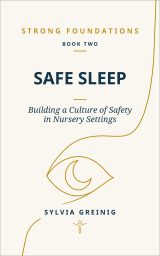
My book Safe Sleep: Building a Culture of Safety in Nursery Settings explains the requirements in clear, everyday language, and shows how to make safe sleep part of everyday practice, so that safety becomes something the whole team does without thinking. It’s Book Two in the Strong Foundations series.
Sources:

