Every child in your nursery has two worlds. There is the world of home, with its routines, its people, its bedtime stories and its bad nights. And there is the world of nursery, with its friendships, its new skills, its small triumphs and its wobbles.
The child moves between those two worlds every single day. Too often, the adults in them barely speak.
I want to say something that I have believed for my entire career, and that I believe more strongly now than ever: no practitioner, however skilled, can see the whole child alone. And neither can any parent. It takes both of us. When we fail to work together, it is the child who falls through the gap between us.
The hurried handover
We all know the picture. Half past five on a wet Thursday. A parent rushes in from work, coat dripping, car on the yellow line. The practitioner has eleven children still to hand over. “He’s been fine, had a good lunch, bit tired.” A wave, a smile, and gone.
Nobody has done anything wrong. And yet something precious has been lost. The practitioner noticed that he spent twenty minutes building a tower and wouldn’t let anyone help. The parent noticed that he has been waking at four in the morning since his grandad went into hospital. Put those two pieces together and you begin to understand a child. Kept apart, they are just passing details.
Partnership is not a newsletter
Let me be blunt. Partnership with parents is not a termly newsletter. It is not a parents’ evening twice a year, or an app full of photographs. Those things have their place, but on their own they are communication, not partnership.
Real partnership means sharing what we notice, both ways, and taking each other seriously.
It means the parent who mentions that her daughter has started hiding behind the sofa when the doorbell rings is heard, not reassured and forgotten. It means the practitioner who notices that a little boy has stopped joining in at circle time feels confident to raise it gently, and the family feels respected rather than judged when she does.
It means remembering, always, that parents are the experts on their own children. They knew this child long before we did, and they will know him long after he has left us.
Why it matters so much now
Many families today are under real pressure: long working hours, rising costs, little support nearby. Some parents have had very few chances to meet other families or to learn from those around them, and some are anxious about getting things wrong. A nursery can be one of the steadiest, most trusted places in a young family’s life.
That is a privilege, and a responsibility. When a parent trusts their key person, they are far more likely to share the worry they have been carrying alone, and to listen when we gently share ours. Trust is built in a hundred small moments at the door. It is lost in one careless one.
Noticing together
At the heart of all my work is a simple idea I call the Influence of Noticing: what adults notice shapes what they think, what they do and the culture they create, and that culture shapes children’s lives.
When practitioners and parents notice together, something powerful happens. The picture of the child becomes richer and truer. Small concerns are spotted early, before they become big ones. Successes are celebrated in both worlds, so the child feels seen everywhere. And the child learns that the important adults in their life are on the same side: theirs.
What it looks like in practice
- The key person knows the family, not just the child: names, routines, what matters at home.
- Handovers include one real thing each day, something the child did, said or discovered, not just meals and naps.
- Parents are asked, not only told. “What have you noticed at home lately?” is one of the most useful questions in early years.
- Concerns are raised early and kindly, in private, with curiosity rather than conclusions.
- Difference is respected. Families do things differently, and that is not the same as doing them wrongly.
- Every voice is welcomed, including dads, grandparents, carers and families who don’t speak English as their first language, and who may need us to take the first step.
Three questions for your setting this week
- Could every key person in your setting tell you something that matters to their children’s families?
- When did a parent last tell you something that changed how you understood their child?
- If a parent were worried, would they feel able to tell you, or would they keep quiet in case they were judged?
To every practitioner at the door at half past five
Those few moments at handover may feel rushed and ordinary. They are not. They are where trust is built, and trust is what allows a child to be truly seen. Make them count.
Get the Shared Observation Conversation free. Join Nursery Matters and I’ll send it straight to your inbox, ready to print as many copies as you need. Use it when a practitioner has noticed something at nursery and a family may have noticed something at home.
Free to join. A new resource every Sunday
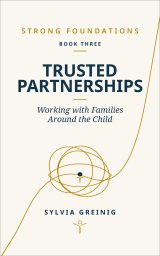
This form is one of thirteen practical tools in Trusted Partnerships: Working with Families Around the Child, along with a family partnership quick review, a closed-loop communication check and a safeguarding information-sharing decision record.