Ask any experienced practitioner, and they will tell you about the feeling.
It’s not dramatic. There is no alarm bell. Just a small, nagging sense that something isn’t quite right. A child who always chatters at the door walks in silently today. A mum who usually lingers to talk hurries away without meeting your eye. A toddler flinches, very slightly, when a colleague raises her voice across the room.
You notice it. And then, so often, the day sweeps you on. Lunch needs serving. A nappy needs changing. Someone’s crying in the home corner. By home time, the feeling has faded, and you tell yourself it was probably nothing.
Sometimes it was nothing. But sometimes it was the first thread of something that mattered very much. And I want every practitioner reading this to know: that feeling is not nothing. It is your professional judgement speaking. Learn to listen to it.
What professional curiosity really means
Professional curiosity is a simple idea with enormous consequences. It means not taking things at face value. It means noticing when something is different or doesn’t add up, even if it seems small or unimportant, and treating that moment as the start of careful thinking rather than the end of it.
It is the opposite of the easy explanation:
- “He’s just tired.”
- “She’s always been shy.”
- “Mum said he fell off the sofa, so that’s fine.”
- “It’s not my key child, so it’s not my place.”
Every one of those explanations might be true. But a curious practitioner doesn’t stop there. She wonders. She asks a gentle question. She looks again tomorrow. She mentions it to the right person. She keeps the door open, instead of closing it with an assumption.
A lesson we keep having to learn
Again and again, when reviews look back at situations where children were harmed, the same painful phrase appears: a lack of professional curiosity. Someone noticed something. It was explained away, accepted at face value or never mentioned. The pieces were there, scattered across different people, and nobody put them together.
I find that heartbreaking, because it is so preventable. Not with more forms, but with more curious adults.
Curiosity is not suspicion
I want to be very clear, because I know this worries some practitioners: professional curiosity is not about suspecting families or looking for trouble. Most of the time, the thing you notice will have a perfectly ordinary explanation: a new baby at home, a poor night’s sleep, a worry about starting school.
Curiosity is not an accusation. It is care with its eyes open. It is the same quality that makes you notice when a child has learned a new word, discovered a passion for dinosaurs or finally managed the buttons on her coat. A curious practitioner notices the joyful things and the worrying things alike, because she is genuinely paying attention to the child in front of her.
Where it begins: noticing with intent
At the heart of all my work is a simple idea I call the Influence of Noticing: what adults notice shapes what they think, what they do and the culture they create, and that culture shapes children’s lives.
Professional curiosity is where it all begins. It is the habit of noticing with intent, and then following that noticing with a simple sequence:
Notice what is new or different.
Wonder what it might mean, without jumping to conclusions.
Ask gently: the child, a colleague, the family.
Listen to what you’re told, and what you’re not told.
Reflect on what you know.
Act, whether that is offering support, recording what you saw or speaking to your safeguarding lead.
Review: look again, and see whether things have changed.
The good news is that curiosity is a skill. It can be practised, strengthened and shared. And the more a team practises it together, the more natural it becomes.
What a curious setting looks like
- Small things are spoken about, not saved up for when they become big things.
- Everyone’s noticing counts: the apprentice’s as much as the manager’s.
- “I wonder…” is heard often, in the room, at handover and in team meetings.
- Nobody is made to feel silly for raising something that turns out to be nothing.
- Observations are recorded honestly, so that patterns can be seen over time.
- Leaders ask “What have you noticed?”, and really want the answer.
Three questions for your setting this week
- When did someone last say, “This might be nothing, but…”, and what happened next?
- Would your newest team member feel confident to raise a small concern?
- When you hear an explanation, do you accept it, or do you stay curious a little longer?
To every practitioner who has had that feeling
Trust it. Not blindly, and not fearfully, but enough to look again, ask gently and share what you’ve seen. You may be the only adult who noticed. You may be the one who makes the difference.
What you notice matters. More than you might ever know.
My book Professional Curiosity: The Influence of Noticing in Early Years Practice helps practitioners look beyond the obvious, spot when something seems different or not quite right, and treat that moment as the start of careful thinking. It’s Book One in the Strong Foundations series, and the foundation for all the others.
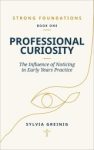
📖 Professional Curiosity on Amazon
Download the Something Seems Off? Quick Observation Checklist and print as many copies as you need. Use it when something about a child doesn’t feel quite right. It helps you separate what you saw from what you assumed, and decide what happens next.
This checklist is a quick version of the Observation to Understanding Record, one of 13 practical tools in Professional Curiosity: The Influence of Noticing in Early Years Practice, along with the Assumption Challenge Record, the Pattern Recognition Record and the Child Voice Reflection Record. Find the book on Amazon