• Ask any experienced practitioner, and they will tell you about the feeling.

    It’s not dramatic. There is no alarm bell. Just a small, nagging sense that something isn’t quite right. A child who always chatters at the door walks in silently today. A mum who usually lingers to talk hurries away without meeting your eye. A toddler flinches, very slightly, when a colleague raises her voice across the room.

    You notice it. And then, so often, the day sweeps you on. Lunch needs serving. A nappy needs changing. Someone’s crying in the home corner. By home time, the feeling has faded, and you tell yourself it was probably nothing.

    Sometimes it was nothing. But sometimes it was the first thread of something that mattered very much. And I want every practitioner reading this to know: that feeling is not nothing. It is your professional judgement speaking. Learn to listen to it.

    What professional curiosity really means

    Professional curiosity is a simple idea with enormous consequences. It means not taking things at face value. It means noticing when something is different or doesn’t add up, even if it seems small or unimportant, and treating that moment as the start of careful thinking rather than the end of it.

    It is the opposite of the easy explanation:

    • “He’s just tired.”
    • “She’s always been shy.”
    • “Mum said he fell off the sofa, so that’s fine.”
    • “It’s not my key child, so it’s not my place.”

    Every one of those explanations might be true. But a curious practitioner doesn’t stop there. She wonders. She asks a gentle question. She looks again tomorrow. She mentions it to the right person. She keeps the door open, instead of closing it with an assumption.

    A lesson we keep having to learn

    Again and again, when reviews look back at situations where children were harmed, the same painful phrase appears: a lack of professional curiosity. Someone noticed something. It was explained away, accepted at face value or never mentioned. The pieces were there, scattered across different people, and nobody put them together.

    I find that heartbreaking, because it is so preventable. Not with more forms, but with more curious adults.

    Curiosity is not suspicion

    I want to be very clear, because I know this worries some practitioners: professional curiosity is not about suspecting families or looking for trouble. Most of the time, the thing you notice will have a perfectly ordinary explanation: a new baby at home, a poor night’s sleep, a worry about starting school.

    Curiosity is not an accusation. It is care with its eyes open. It is the same quality that makes you notice when a child has learned a new word, discovered a passion for dinosaurs or finally managed the buttons on her coat. A curious practitioner notices the joyful things and the worrying things alike, because she is genuinely paying attention to the child in front of her.

    Where it begins: noticing with intent

    At the heart of all my work is a simple idea I call the Influence of Noticing: what adults notice shapes what they think, what they do and the culture they create, and that culture shapes children’s lives.

    Professional curiosity is where it all begins. It is the habit of noticing with intent, and then following that noticing with a simple sequence:

    Notice what is new or different.
    Wonder what it might mean, without jumping to conclusions.
    Ask gently: the child, a colleague, the family.
    Listen to what you’re told, and what you’re not told.
    Reflect on what you know.
    Act, whether that is offering support, recording what you saw or speaking to your safeguarding lead.
    Review: look again, and see whether things have changed.

    The good news is that curiosity is a skill. It can be practised, strengthened and shared. And the more a team practises it together, the more natural it becomes.

    What a curious setting looks like

    • Small things are spoken about, not saved up for when they become big things.
    • Everyone’s noticing counts: the apprentice’s as much as the manager’s.
    • “I wonder…” is heard often, in the room, at handover and in team meetings.
    • Nobody is made to feel silly for raising something that turns out to be nothing.
    • Observations are recorded honestly, so that patterns can be seen over time.
    • Leaders ask “What have you noticed?”, and really want the answer.

    Three questions for your setting this week

    1. When did someone last say, “This might be nothing, but…”, and what happened next?
    2. Would your newest team member feel confident to raise a small concern?
    3. When you hear an explanation, do you accept it, or do you stay curious a little longer?

    To every practitioner who has had that feeling

    Trust it. Not blindly, and not fearfully, but enough to look again, ask gently and share what you’ve seen. You may be the only adult who noticed. You may be the one who makes the difference.

    What you notice matters. More than you might ever know.


    My book Professional Curiosity: The Influence of Noticing in Early Years Practice helps practitioners look beyond the obvious, spot when something seems different or not quite right, and treat that moment as the start of careful thinking. It’s Book One in the Strong Foundations series, and the foundation for all the others.
    This a cover picture of Professional Curiosity by Sylvia Greinig

    📖 Professional Curiosity on Amazon

    Download the Something Seems Off? Quick Observation Checklist and print as many copies as you need. Use it when something about a child doesn’t feel quite right. It helps you separate what you saw from what you assumed, and decide what happens next.

    This checklist is a quick version of the Observation to Understanding Record, one of 13 practical tools in Professional Curiosity: The Influence of Noticing in Early Years Practice, along with the Assumption Challenge Record, the Pattern Recognition Record and the Child Voice Reflection Record. Find the book on Amazon
  • Picture a child at the edge of the room. He isn’t causing trouble. He isn’t asking for anything. He is simply there: lining up the cars along the windowsill, again and again, while the busy, cheerful life of the nursery flows around him.

    He is safe. He is fed. He is, on paper, included.

    But is he seen?

    I have walked into a great many nurseries in my life, as a principal, as an inspector and as a visitor. And I can tell you that the true measure of a setting is not how it cares for the confident, chatty child who runs to greet you at the door. It is how it cares for the child who doesn’t.

    Inclusion is not a policy. It is a promise.

    Every setting has an inclusion policy. Every setting says it welcomes children with special educational needs and disabilities. But I want to say something uncomfortable: a child can be on the register, in the room and in every photograph, and still not truly belong.

    Inclusion is not about where a child sits. It is about whether the adults around them have taken the trouble to understand them: what delights them, what frightens them, how they communicate, what they are trying to tell us, and what they can do.

    That last point matters enormously. Too often, children with additional needs are described only by what they can’t do: can’t sit still, can’t share, can’t talk yet, can’t cope with change. Read enough of those descriptions and you stop seeing a child at all. You see a list of problems.

    I refuse to accept that. And I believe every practitioner who chose this work refuses it too.

    Seeing the child, not the label

    At the heart of all my work is a simple idea I call the Influence of Noticing: what adults notice shapes what they think, what they do and the culture they create, and that culture shapes children’s lives.

    For children with SEND, this is not abstract. It is everything.

    • If we notice only the behaviour, we will respond with management. If we notice what the behaviour is telling us, we will respond with understanding.
    • If we notice only the delay, we will see a deficit. If we notice the tiny steps forward, we will see a child who is learning, in their own way and at their own pace.
    • If we notice only the diagnosis, or wait for one, we may lose months of support. If we notice early, and act with care, we can change the course of a child’s life.

    The little boy with the cars may be telling us a great deal. He may love order in a world that feels chaotic. He may be finding comfort in repetition. He may be waiting for someone to sit beside him, line up a car of their own, and wait to see what he does next. That is where inclusion begins: with one adult who notices, and wonders, and stays.

    Why this matters now

    More children are coming into early years with additional needs, and many settings are stretched to breaking point. Waiting lists for assessments are long. Specialist support can be hard to reach. Practitioners, many of whom trained during the Covid years with little hands-on experience, are often left to work it out alone.

    I understand the pressure. But the child cannot wait for the system to catch up. The early years are when support makes the greatest difference, and the people with the greatest opportunity to notice are the ones in the room every day: you.

    What a truly inclusive setting does

    • It notices early, and records what it sees with curiosity, not judgement.
    • It talks to families, who know their child better than anyone, and who may have been worried for a long time.
    • It adapts the environment: quieter corners, visual timetables, predictable routines, time to process.
    • It builds on strengths, using a child’s passions as the doorway to learning.
    • It values every form of communication: words, signs, gestures, pictures, and the meaning in behaviour.
    • It supports staff, so that no practitioner feels they are facing a child’s needs alone.
    • It celebrates progress of every size, because for some children, a single shared glance is a triumph.

    Three questions for your setting this week

    1. Is there a child in your setting who is present, but not yet truly seen?
    2. When you describe a child with additional needs, do you start with what they can do?
    3. Does every member of your team feel confident to notice, and supported to act?

    To every practitioner who has sat beside a child at the edge of the room

    You may never know what that moment meant. To you, it was five minutes on a busy morning. To that child, it may have been the first time an adult stepped into their world rather than asking them to step into ours.

    That is inclusion. That is what it means for every child to be seen.


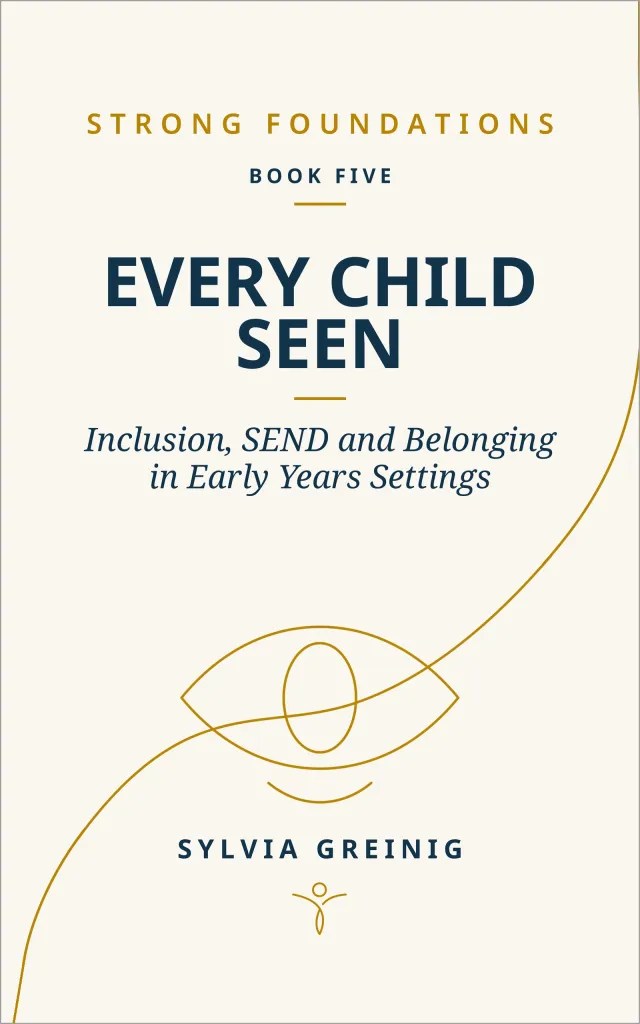
    My book Every Child Seen: Inclusion, SEND and Belonging in Early Years Settings supports practitioners in including children with SEND, neurodiversity or additional needs, focusing on what each child can do and how settings can make sure every child belongs. It’s Book Five in the Strong Foundations series.

    Get the Belonging and Participation Snapshot free. Join Nursery Matters and I’ll send it straight to your inbox, ready to print as many copies as you need. Complete it with the people who know a child in different situations, to see where joining in is easy, where it needs support and where it’s out of reach.

    📖 Every Child Seen on Amazon

  • Every child in your nursery has two worlds. There is the world of home, with its routines, its people, its bedtime stories and its bad nights. And there is the world of nursery, with its friendships, its new skills, its small triumphs and its wobbles.

    The child moves between those two worlds every single day. Too often, the adults in them barely speak.

    I want to say something that I have believed for my entire career, and that I believe more strongly now than ever: no practitioner, however skilled, can see the whole child alone. And neither can any parent. It takes both of us. When we fail to work together, it is the child who falls through the gap between us.

    The hurried handover

    We all know the picture. Half past five on a wet Thursday. A parent rushes in from work, coat dripping, car on the yellow line. The practitioner has eleven children still to hand over. “He’s been fine, had a good lunch, bit tired.” A wave, a smile, and gone.

    Nobody has done anything wrong. And yet something precious has been lost. The practitioner noticed that he spent twenty minutes building a tower and wouldn’t let anyone help. The parent noticed that he has been waking at four in the morning since his grandad went into hospital. Put those two pieces together and you begin to understand a child. Kept apart, they are just passing details.

    Partnership is not a newsletter

    Let me be blunt. Partnership with parents is not a termly newsletter. It is not a parents’ evening twice a year, or an app full of photographs. Those things have their place, but on their own they are communication, not partnership.

    Real partnership means sharing what we notice, both ways, and taking each other seriously.

    It means the parent who mentions that her daughter has started hiding behind the sofa when the doorbell rings is heard, not reassured and forgotten. It means the practitioner who notices that a little boy has stopped joining in at circle time feels confident to raise it gently, and the family feels respected rather than judged when she does.

    It means remembering, always, that parents are the experts on their own children. They knew this child long before we did, and they will know him long after he has left us.

    Why it matters so much now

    Many families today are under real pressure: long working hours, rising costs, little support nearby. Some parents have had very few chances to meet other families or to learn from those around them, and some are anxious about getting things wrong. A nursery can be one of the steadiest, most trusted places in a young family’s life.

    That is a privilege, and a responsibility. When a parent trusts their key person, they are far more likely to share the worry they have been carrying alone, and to listen when we gently share ours. Trust is built in a hundred small moments at the door. It is lost in one careless one.

    Noticing together

    At the heart of all my work is a simple idea I call the Influence of Noticing: what adults notice shapes what they think, what they do and the culture they create, and that culture shapes children’s lives.

    When practitioners and parents notice together, something powerful happens. The picture of the child becomes richer and truer. Small concerns are spotted early, before they become big ones. Successes are celebrated in both worlds, so the child feels seen everywhere. And the child learns that the important adults in their life are on the same side: theirs.

    What it looks like in practice

    • The key person knows the family, not just the child: names, routines, what matters at home.
    • Handovers include one real thing each day, something the child did, said or discovered, not just meals and naps.
    • Parents are asked, not only told. “What have you noticed at home lately?” is one of the most useful questions in early years.
    • Concerns are raised early and kindly, in private, with curiosity rather than conclusions.
    • Difference is respected. Families do things differently, and that is not the same as doing them wrongly.
    • Every voice is welcomed, including dads, grandparents, carers and families who don’t speak English as their first language, and who may need us to take the first step.

    Three questions for your setting this week

    1. Could every key person in your setting tell you something that matters to their children’s families?
    2. When did a parent last tell you something that changed how you understood their child?
    3. If a parent were worried, would they feel able to tell you, or would they keep quiet in case they were judged?

    To every practitioner at the door at half past five

    Those few moments at handover may feel rushed and ordinary. They are not. They are where trust is built, and trust is what allows a child to be truly seen. Make them count.


    Get the Shared Observation Conversation free. Join Nursery Matters and I’ll send it straight to your inbox, ready to print as many copies as you need. Use it when a practitioner has noticed something at nursery and a family may have noticed something at home.

    Free to join. A new resource every Sunday

    This form is one of thirteen practical tools in Trusted Partnerships: Working with Families Around the Child, along with a family partnership quick review, a closed-loop communication check and a safeguarding information-sharing decision record.


    📖 Trusted Partnerships on Amazon

  • There is a moment in every nursery day that looks like the quietest of all. The lights are dimmed. The room settles. Small chests rise and fall. For a little while, everything slows down.

    And it is precisely then that we must be most awake.

    I have spent more than forty years in early years and education, and I will say this as plainly as I can: sleep time is not downtime. It is not the moment to catch up on paperwork, to tidy the room, or to step out “just for a minute”. A sleeping baby is as completely in our care as they will ever be, unable to call out, unable to move away from danger, and relying entirely on the adults around them to keep them safe.

    The rules have changed, and rightly so

    This year, safer sleep moved from good advice to clear, firm expectation. Guidance published by the Department for Education with the Lullaby Trust has now been drawn into the EYFS framework, and Ofsted will expect to see it in practice. The essentials are these:

    • Children under two are put down on their backs, in their own separate sleep space, on a firm, flat surface.
    • Babies aged twelve months and under sleep in a cot, carrycot, Moses basket or travel cot that meets British Safety Standards.
    • The cot holds nothing but a firm, flat, waterproof mattress and lightweight bedding tucked below the shoulders, or a well-fitted sleep bag. No toys, no pillows, no bumpers, no wedges, no straps, and no loose bedding. Heads are never covered.
    • Babies under six months have an adult in the same room for every sleep.
    • Every sleeping child is checked frequently and kept within sight and hearing of staff. Monitors may help with older babies, but they never replace a physical check.
    • A child who falls asleep in a car seat or pram is moved to their own sleep space as soon as they return. A pushchair is never a bed.
    • The room is kept between 16 and 20°C for babies of twelve months and under.

    Some practitioners have greeted these changes with a sigh: more rules, more checks, more to remember. I understand the weariness. Early years staff carry an enormous load. But I want to ask you to see these requirements differently.

    These are not rules. They are lessons, learned at a terrible cost.

    Every line of safer sleep guidance exists because, somewhere, a child did not wake up. Behind each requirement is a family whose world ended in an afternoon, and staff who will carry that day for the rest of their lives. When we treat safer sleep as box-ticking, we forget those children. When we follow it with care, we honour them.

    So let no one tell you these requirements are bureaucracy. They are the hard-won wisdom of our profession, and we owe it to every baby in our care to get them right, every sleep, every baby, every time.

    Where it goes wrong

    In my experience, safe sleep rarely fails because people don’t know the rules. It fails in the gaps:

    • The baby who drifts off in a buggy after a walk, and is left there “because she’s settled”.
    • The blanket that slips up over a face while staff are busy with the next nappy change.
    • The sleep check that becomes a glance from the doorway.
    • The new practitioner who isn’t sure whether she’s allowed to wake a colleague’s key child, and so does nothing.
    • The comforter tucked in “because his mum asked”.

    None of these come from carelessness. They come from busy days, kind intentions and habits that have quietly slipped. And that is exactly why safe sleep must be a culture, not just a policy.

    What we notice keeps babies safe

    At the heart of all my work is a simple idea I call the Influence of Noticing: what adults notice shapes what they think, what they do and the culture they create, and that culture shapes children’s lives.

    Nowhere is this truer than at sleep time. A truly safe sleep check is not a glance. It is noticing with intent: the colour of a baby’s skin, the rhythm of their breathing, the position of their head, the warmth at the back of the neck, the bedding below the shoulders. It is noticing when something is even slightly different, and acting on it at once.

    A safe sleep culture is one where:

    • Every adult knows the requirements and the reasons behind them.
    • A new practitioner feels confident to speak up if she sees a risk, whoever is responsible for that child.
    • Sleep checks are real checks, recorded honestly, never filled in afterwards.
    • Leaders make safe sleep part of daily conversation, not an annual training slide.
    • Parents are welcomed as partners, and helped to understand why the nursery may do things differently from home.

    Three questions for your setting this week

    1. If I walked into your sleep room right now, would every cot be completely clear?
    2. Could your newest member of staff explain why babies under six months must never sleep alone in a room?
    3. When a child falls asleep in a pushchair, does someone move them, every single time?

    If any of those made you hesitate, you are not alone, and it can be put right, starting today.

    To every practitioner who settles a sleeping baby

    Your work matters more than you might ever know. The quiet care you give at sleep time, the checks no one sees and the vigilance no one thanks you for, is among the most important work in any nursery. Do it with pride.


    Free for your setting

    Join Nursery Matters free, and every Sunday a new practical resource from the Strong Foundations series will arrive in your inbox, ready to print and use in your setting.

    This checklist is one of thirteen practical tools in Safe Sleep: Building a Culture of Safety in Nursery Settings, along with a self-assessment audit, a parent information leaflet and a model safe sleep policy.


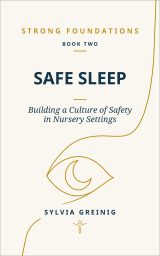
    My book Safe Sleep: Building a Culture of Safety in Nursery Settings explains the requirements in clear, everyday language, and shows how to make safe sleep part of everyday practice, so that safety becomes something the whole team does without thinking. It’s Book Two in the Strong Foundations series.

    📖 Safe Sleep on Amazon

    Sources:

  • Every nursery has a safeguarding policy. Most have a designated lead, a training log and a folder that would satisfy any inspector who asked to see it. And yet, when things go wrong in early years settings, it is rarely because the folder was missing.

    It is usually because something was noticed and not acted on. A bruise that was explained away. A change in a child’s behaviour that nobody connected to anything else. A colleague’s conduct that made someone uneasy, but not uneasy enough to mention anything.

    Safeguarding lives in the room

    In my years as a School Principal and as an inspector, I came to believe that safeguarding is not something a setting has. It is something a setting does, every hour of every day, through the attention of the adults in it.

    I call this the Influence of Noticing. What we notice shapes what we think, what we do and the culture we create. And that culture shapes children’s lives.

    Why this matters now

    The early years sector is rightly being asked to look harder at safeguarding. Inspectors now want to see that it is woven into everyday practice, not just written down. For many settings, that is a welcome challenge. For many young practitioners, it can feel daunting.

    A great number of today’s practitioners trained during or just after the Covid years. Their courses moved online, their placements were cut short, and they lost the chance to learn safeguarding the way it is best learned: by watching experienced colleagues notice, question and act. None of that was their fault. But it does mean that many need support to build the confidence that safe practice depends on.

    Three questions for every setting

    • Would your newest practitioner feel confident raising a concern about a colleague?
    • When someone notices something small, is there a habit of saying it out loud?
    • Do your team understand why each procedure exists, or only what it says?

    If any of those gave you pause, you are not alone, and the answers can be built.

    Building the culture

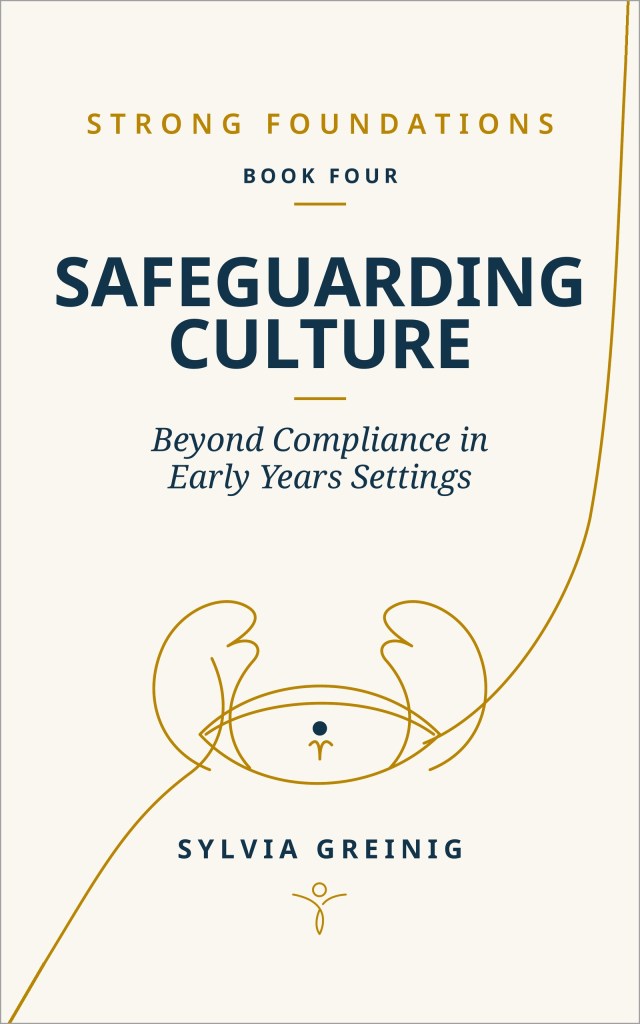
    My book Safeguarding Culture: Beyond Compliance in Early Years Settings is written for exactly this purpose. In plain, everyday language, it helps practitioners, room leaders and managers move from compliance to culture, so that keeping children safe becomes part of who the team is, not just what the policy says.

    It is Book Four in the Strong Foundations series, and you can find it here:

    https://amzn.eu/d/0eitIWhp

    Because what you notice matters. More than you might ever know.


    Join Nursery Matters free, and every Sunday a new practical resource from the Strong Foundations series will arrive in your inbox, ready to print and use in your setting.

    This record is one of sixteen practical tools in Safeguarding Culture: Beyond Compliance in Early Years Settings, along with a safeguarding culture audit, a safer recruitment checklist and a 30/60/90-day plan.